




















Find Alex Farner at Sollus
How has yoga and bodywork supported you through pregnancy, birth and postpartum?
My yoga practice has been everything - physically, mentally and emotionally carrying me through this wild ride!
Yoga has become a way of life, whether on the mat or finding little moments between clients to stretch, release and strengthen as my body and needs change. My antenatal training helped me navigate pregnancy aches, pains and pelvic instability, and now supports my gentle postpartum recovery.
Bodywork can also be simple, from foot massages to acupressure. Lymphatic drainage can help reduce postpartum swelling and fluid retention, support breast health and help prevent blocked ducts.
What did pregnancy and postpartum teach you about your body that you never expected?
I had a profound gratitude and awe of my body through pregnancy and birth, which I think came from understanding the amazing physiological process behind it. Any aches and pains sparked curiosity and became an opportunity to experiment with the knowledge I’ve built up over the years.
Recovering from a vaginal birth and tear took me by surprise. Despite knowing the best ways to support my recovery, I naively thought I’d heal more quickly. But there’s simply no shortcut to healing, even when you do everything you can to optimise your recovery.
Can yoga and bodywork actually help prepare the body for labour? Any particular practices do you recommend before birth?
Absolutely! Yoga and bodywork are invaluable for labour preparation.
I teach yoga with a focus on body literacy, helping women observe, read and respond to their body’s signals, sensations and rhythms. It’s not just a case of ‘listen to your body’, but a practice and testing ground for what suits her needs and when, giving her a toolkit of skills to use during birth. It’s always different depending on the woman, birth and baby.
Hands-on bodywork is also a beautiful practice of safe surrender, helping release tension and fear while calming the nervous system.
What breathing techniques would you teach an expectant mum to practise before labour?
It’s hard to choose a single technique so my favourite foundation is a 360 degree diaphragmatic breath. I commonly teach women how to breathe from their diaphragm and understand the connection between this muscle and the pelvic floor. This connection is so powerful that once we have this foundation, you understand how to both engage and relax the deep core and pelvic floor. It’s not about taking bigger breaths, but better breaths!
My clients tell me that they hear my voice saying ‘soften your cheeks’ in labour, so let that be your takeaway!
Can the pelvic floor become too tense during pregnancy? How can mums learn to relax and release these muscles, as well as strengthen them?
Most of the women I work with actually have a tight or ‘hypertonic’ pelvic floor, often hidden in plain sight! Common causes include stress, shallow breathing, rounded shoulders, posture, and even weak glutes or core. Symptoms like leaking or bladder urgency are often mistaken for a weak pelvic floor.
A growing baby puts extra weight and strain on the pelvic floor, so some strengthening may be needed. But understanding how these muscles work to both strengthen AND soften is key to a functional pelvic floor.
I often compare it to a bicep curl. If our arm is always curled, it’s not very useful. It needs to extend AND curl to function properly.
It’s never too early or too late to learn. I work with women in person and online to find the right diagnosis, exercises and techniques for each individual.
When is the right time for mums to gently move and reconnect with their bodies after birth? Tell us about your journey!
The 360 breathing can be used immediately after birth to help reduce stagnation, avoid adhesions and keep the front body open. For a simple version, sit or lie down with your hands on either side of your rib cage, just below your boobs. Close your eyes and imagine breathing into your hands, feeling your ribs gently expand outwards as you breathe in and soften as you breathe out. Keep your belly relaxed and take 10 subtle breaths, then return to your day feeling reset.
Everyone’s journey is different. I started moving and stretching on the mat in my second week, but this depends on your birth and how active you were beforehand. Research shows that the abdominal separation and tissues are reconnecting during the first six weeks, so gentle breathwork and deep core engagement can help support this process.
And let’s not be too hard on ourselves. A mindful minute, a shoulder roll or your favourite hamstring stretch while the kettle boils may be much kinder and more replenishing right now than an hour of high-intensity exercise at the gym.
“I’m not flexible and I’ve never done yoga before.” What would you say to mums who want to prepare for birth but don’t know where to start?
Yoga is rarely about flexibility, so give it a try!
And if you’re planning for birth then there’s no better time to try yoga, it can be the perfect blend of effort and ease. You might find muscles you didn’t know existed!
So many mums discover yoga during pregnancy and continue long after their babies grow up. It helps us feel calm, rested and connected to ourselves. Yoga is a lifelong practice and an investment in the wellbeing of the whole family.
After birth, how can gentle yoga and bodywork help mums reconnect with their bodies and feel like themselves again, without the pressure to “bounce back”?
I just don’t think bouncing back is a thing, there’s only forwards! I’ve seen clients become their strongest selves after pregnancy and birth, as the experience gives them the opportunity to understand their bodies like never before.
Personally, I still remind myself that rebuilding takes time after 9+ months of changes, especially when we have high expectations of ourselves.
My advice is to build a strong foundation first. Mindful, breath-based yoga that integrates the pelvic floor can help mums reconnect with their bodies before returning to running, weights or whatever else they enjoy.
Bodywork is also a powerful way to receive loving kindness, especially for scar tissue, numbness, fluid build-up, digestive issues and tension - all common in new mums.
Your top 5 postpartum essentials!
Don’t throw your Fit ball out after pregnancy! We rock and bounce my baby girl on it every day and it’ll save your back.
Franjos Kitchen Motherhood Hydration Powder Mixed Berry. Hydration is everything right now!
I made a caddy with Bare Mum products and it was a lifesaver after coming home from hospital, like peri wash bottle, foam, pads and ice packs.
Mammae for all my nipple needs! Lymphatic massage and ice packs also helped save me from mastitis early on.
Body brush and shower oil! Your shower might be your only "you" time now, so make it a little luxury and reconnect with the skin you’re in.
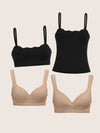
How have you found the Mumma Milla Collection?
It’s no secret that I love the Mumma Milla Collection!
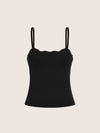
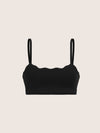
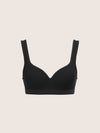
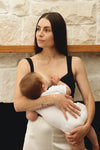
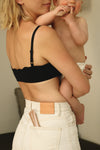
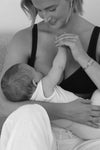
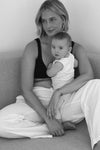
Supportive enough for activewear, chic enough to wear alone. soft, comfortable and easy to breastfeed in. No wires, clips or fuss!
A black Mumma Milla cami was my first "baby" purchase and now I have a wardrobe full of colours and styles that fit my life perfectly!


